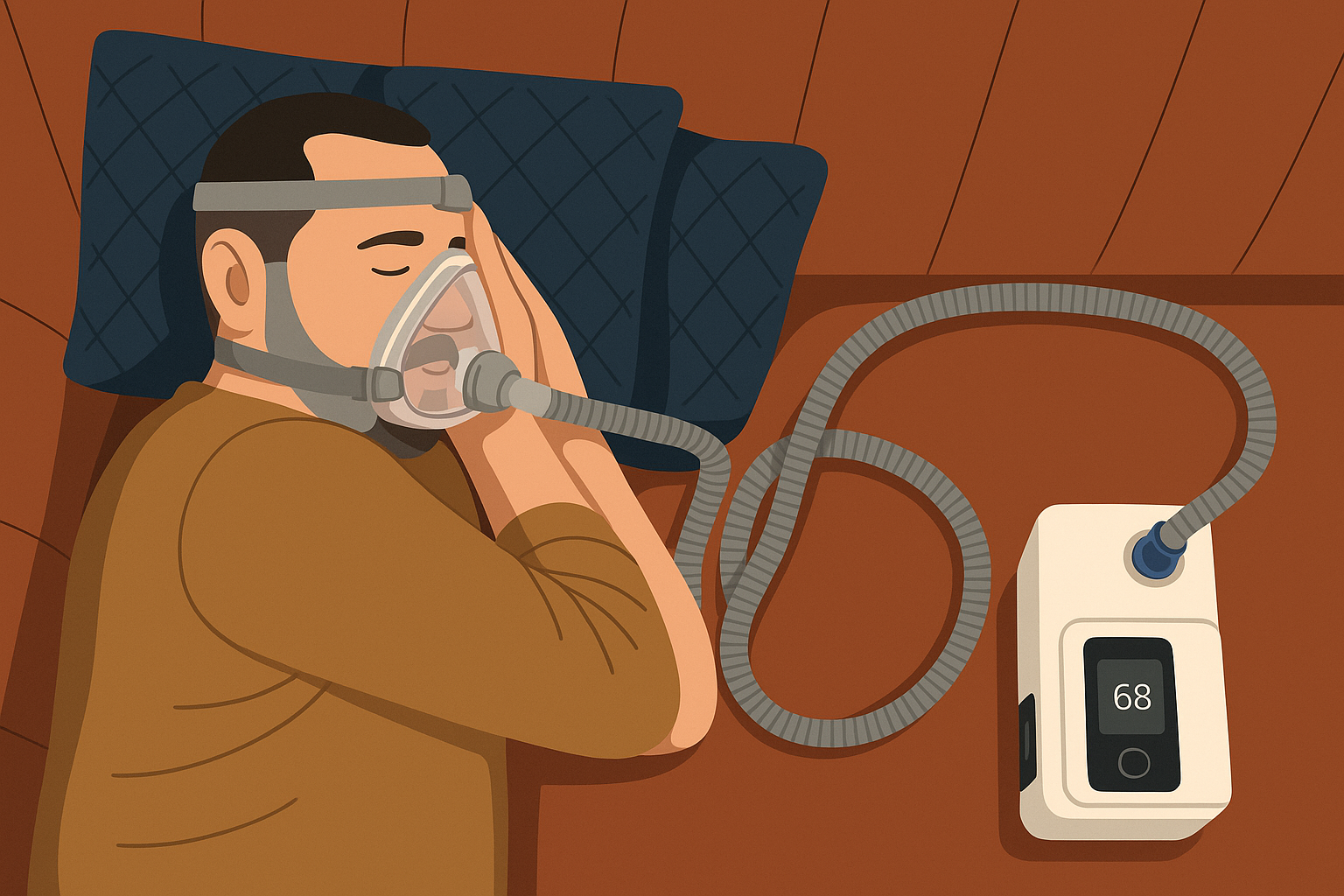

Struggling with loud snoring, gasping for air during sleep, or constant daytime tiredness? You might be experiencing Obstructive Sleep Apnea (OSA) — a serious but treatable condition where your airway collapses repeatedly during sleep, briefly cutting off your breathing. These pauses can happen hundreds of times each night, leaving you exhausted without even realizing it.
Sleep apnea affects about 1 in 5 adults, but 80% of cases remain undiagnosed. If you suspect you may have sleep apnea, you’re not alone — and getting tested is the first step to feeling better.
+1-403-453-7104 +1-587-523-0030 +1-587-390-3550
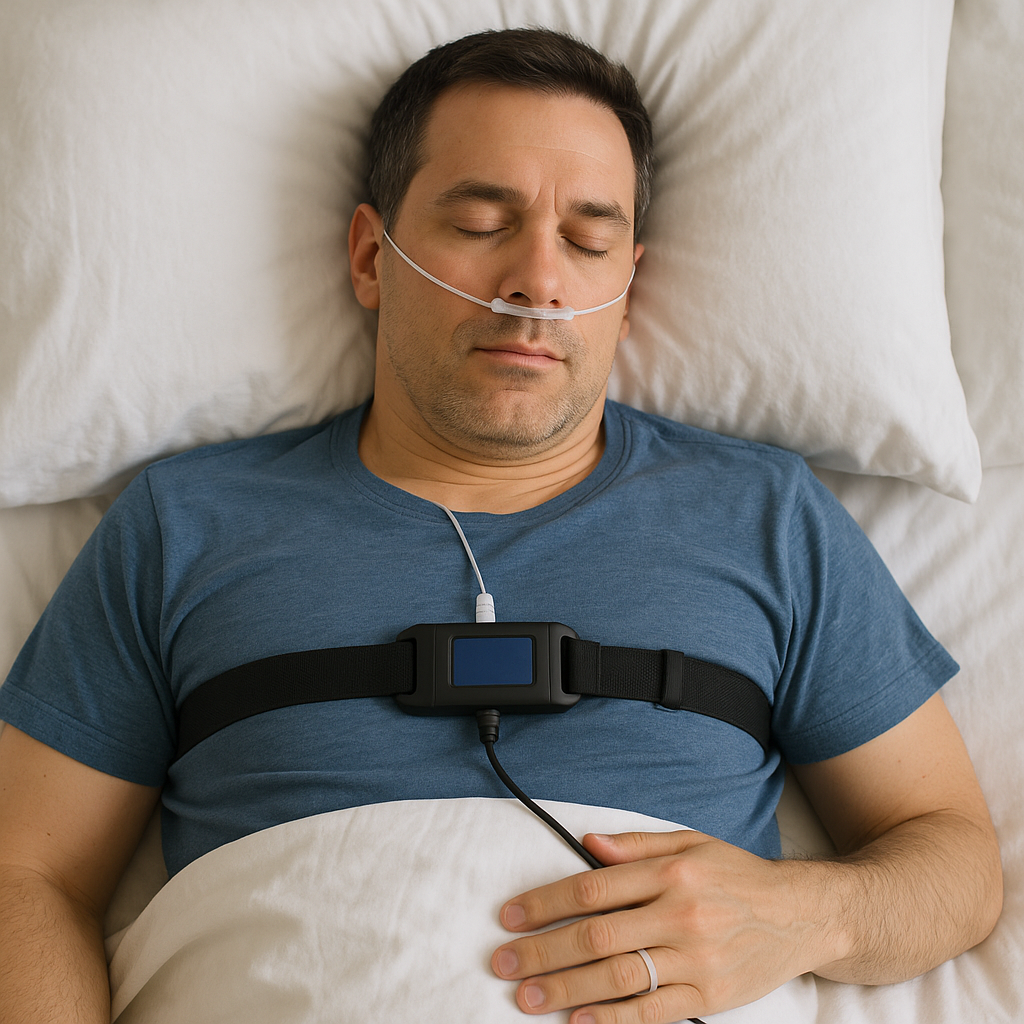
Referred to as comprehensive polysomnography (PSG), the level 1 sleep study is an overnight test performed in a specialized sleep centre under physician’s supervision. The patient has to be physically present as it’s conducted in a clinical setting. The physician monitors real-time data such as brain waves, muscle activity, heart rate, breathing, and more. It is the preferred method for severe Obstructive Sleep Apnea (OSA) patients.
Known as portable or at-home polysomnography, the level 2 sleep study is a self-conducted test in the comfort of the patient's home. It records all the physiological and physical signals just like level 1, but without a physician’s supervision or real-time expert monitoring.
Referred to as Home Sleep Apnea Test (HSAT), level 3 is also an at-home test like level 2 but focused solely on Obstructive Sleep Apnea (OSA). It records breathing, snoring, oxygen levels, heart rate, and other key health parameters. Level 3 is simple, quick, and user-friendly compared to level 1 and 2.

Home Sleep Apnea Test (HSAT) is a popular sleep apnea test across the world, opted for remote diagnosis and quick results. This test offers convenience and comfort, as patients can carry-out the diagnosis procedure at their home. Also, HSAT simplifies the testing complexities, reduces wait time, generates timely results, and is cost-effective than any other sleep disorder tests.

Patients who are already using CPAP therapy and need follow-up testing can qualify for HSAT.
You're eligible if you do not have cardiopulmonary, neuromuscular, or other sleep disorders.
Screening tools like ESS, Berlin, or STOP-Bang indicate a high risk of Obstructive Sleep Apnea (OSA).
Loud snoring, morning headaches, gasping during sleep, or daytime drowsiness may indicate OSA.
HSAT is ideal if you do not have swift access to a sleep lab for an in-lab polysomnography (PSG).
Patients who are otherwise medically stable and have no serious illnesses can opt for HSAT.
Below are the categories that shouldn’t go for HSAT.
If central sleep apnea is suspected, Level-1 in-lab testing is recommended over HSAT.
Patients with weak hearts or a medical history of heart problems should opt for in-lab testing.
Patients diagnosed with COPD or chronic hypoventilation are advised against HSAT.
Children under 18 should consult a pediatric sleep expert before undergoing any sleep testing.
Patients with significant impairments may not perform HSAT correctly without supervision.
Patients with a prior inconclusive or negative HSAT result may need a full in-lab study.
Consult a doctor or a certified sleep specialist for a sleep study referral. This is mandatory for taking the HSAT test.
After approval, perform the sleep test at home by following all instructions for accurate and trustworthy results.
Based on analysis, your physician will guide you with the right treatment path.
Note: Return the machine promptly to Freedom Respiratory clinic. A clinician from our clinic will call you (within 5 to 7 working days) to discuss the results and treatment options if necessary. A copy of the sleep study results will be forwarded to your physician, including the recommendation of the sleep specialist
Obstructive Sleep Apnea (OSA) is a sleep-related breathing disorder mostly prevalent among middle-aged individuals. This sleep condition is also pervasive among various other groups, including patients suffering from respiratory disorders, smokers, alcoholics, people with a family history where one of the family members suffers from sleep apnea, etc. The right step forward to resolve this […]
One of the largest meta-analyses published in The Lancet Respiratory Medicine showed that CPAP Therapy in individuals with obstructive sleep apnea lowered death risk by 37% in contrast to those who didn’t opt for it. If sleep apnea is left untreated for a long period, then there’s a higher chance the patient gets impacted with […]
“Smoking is injurious to health” – a bold warning statement etched on the cartons of cigarettes supplemented with the after effect visuals of respiratory health – serves as a mandated reminder of the perils of tobacco consumption. In March 2024, the Canadian tobacco manufacturers produced 1.2 billion cigarettes, which grew 5.1% compared to 1.1 billion […]
Struggling with Sleep or Snoring Issues?
Follow The Steps Below And Book Your Sleep Study Test With Us Today
Step 1: Get a mandatory referral from a doctor. Access the referral form by downloading it directly from our website.
Step 2: Fill in the necessary details and have it signed by the patient’s physician, or post-medical consultation by the concerned physician.
Step 3: Click on the “Get Appointment” below and book your sleep study test. Or, the patient can directly visit any of our clinics, either in Edmonton or Calgary, and book a slot for the sleep study test.
Step 4: The Freedom Respiratory & Sleep Clinic team will contact the patient to guide them with the next steps.
NOTE: Under the College of Physicians & Surgeons of Alberta (CPSA) guidelines, any licensed physician may refer their patient for a sleep study, providing their signature and Practitioner Identification Number (PRAC ID).
Obstructive Sleep Apnea (OSA) is a common sleep disorder characterized by repeated episodes of partial or complete obstruction of the upper airway during sleep. These episodes can result in intermittent reductions or cessations in airflow, typically lasting for 10 seconds or longer. The breathing disruptions can occur multiple times throughout the night and may lead to significant drops in oxygen saturation.
Obstructive Sleep Apnea occurs when the muscles in the throat relax during sleep, causing the soft tissues of the upper airway to collapse and obstruct airflow. This obstruction is most often due to anatomical factors, such as excessive fat deposition around the neck, enlarged tonsils, or a smaller than average airway. The severity of OSA is influenced by factors such as body weight, age, and the presence of other health conditions.
Individuals with OSA often do not recognize the apneas that occur during sleep, but they may report:
If left untreated, OSA can lead to significant long-term health complications, including:
Cardiovascular Issues:
Metabolic Effects:
Neurocognitive and Mental Health Effects:
Other Health Complications: