
From basic activities to strength workouts, your lungs play a major role in supporting all the body’s functions. They act as a protective shield to external toxic pollutants and harmful substances in the air, such as dust, dirt, smoke, fumes, chemical gases, viruses, bacteria, and other dangerous pathogens that irritate and damage the lungs.
There are innumerable exercises online that teach you how to improve the quality of your lungs, but no breathing exercise can beat the magic of “pranayama.” In this tutorial, learn everything about pranayama for deeper sleep.
What is Pranayama Breathing?
Pranayama for deeper sleep is an art of conscious and controlled breathing. It is an ancient yogic exercise that allows you to take charge of your body, mind, and soul through deep breathing techniques.
The word “Prana” originates from Sanskrit, where “Pra” signify “forward or forth”, and “An” denotes “to breathe” and “to live.” The word “Ayama” stems from Sanskrit, too. “Yam” connotes “to control,” “restrain,” or “extend.” Put together, Pranayama is a breathing exercise that allows you to take conscious control over your breath, thereby influencing the flow of life’s energy in the body.
Besides, pranayama not only regulates your lung health but also builds a root connection with every cell in your body. It also reduces your stress, stabilizes your mind, and keeps you calm and focused throughout the day.
There are various types and techniques of pranayama breathing exercises for deeper sleep, namely, Nadi Shodhana, Bhastrika, Kapalabhati, Bhramari, Ujjayi, and Sheetali/Sheetkari.
So, where did this Pranayama come from?
Origins and Roots of Pranayama
Tracing back nearly 3,000 years, the concept of pranayama for deeper sleep emerged during the late Vedic and post-Vedic era in the Upanishads. It says that conscious regulation of breath is considered a vital force for physical and mental well-being, and pranayama offers just that.
As yoga practices became popular, Patanjali’s Yoga Sutras described Pranayama as the fourth limb of the eight limbs of yoga. In the current period, pranayama practice is not just about breathing anymore, but more about regulating your breath with awareness and channelling the good energy to all parts of the body.
A 2024 study stated that pranayama for deeper sleep improves the levels of AHI, RDI, and ODI.
How to do Pranayama for Better Sleep?
If you are a beginner to Yoga and breathing exercises, here’s a step-by-step guide on how to do pranayama for deeper sleep. In this step-by-step tutorial, you’ll learn the process of one of the deep breathing techniques called Ujjayi Pranayama or Ocean Breath.
- Step 1: First, sit on a comfortable mat or a plain surface. After sitting, ensure that you are fully calm and composed.
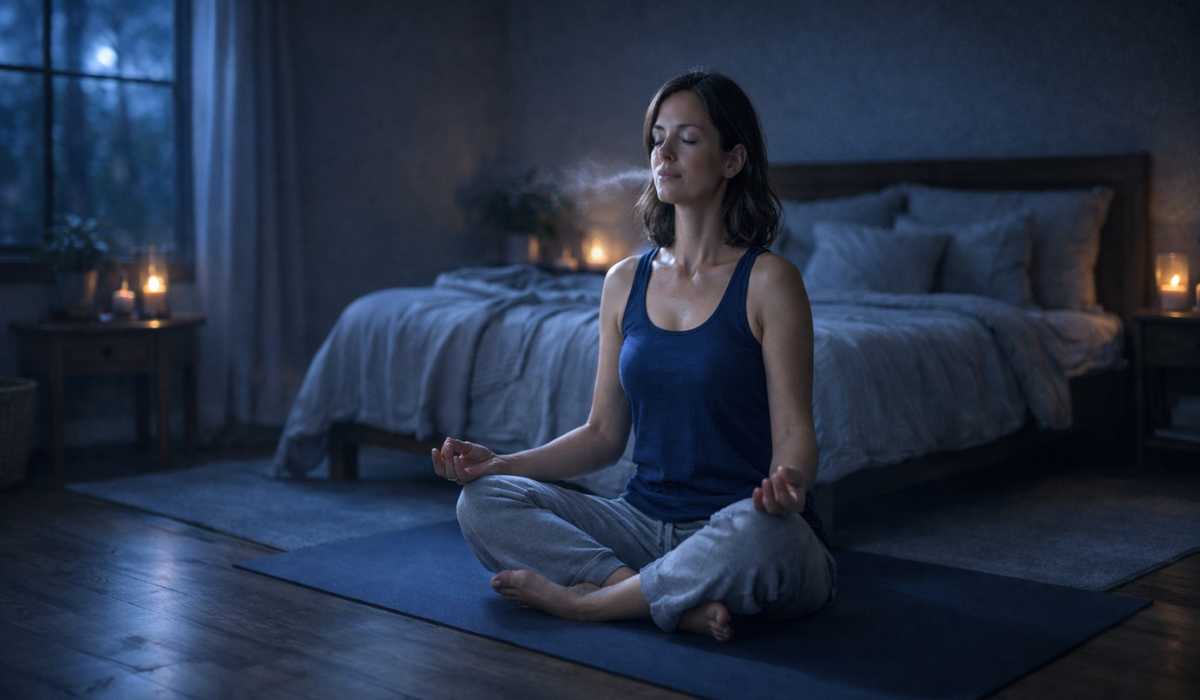
- Step 2: Sit cross-legged with your spine facing straight and rolled back shoulders. You can sit on any firm surface, like a chair, bed, yoga mat, or couch.
- Step 3: Keep your eyes and lips closed. Take a deep breath through your nose. Inhale as much as possible than your normal breathing.
- Step 4: Fill your lungs with the air you inhale. When you breathe in through your nose, you should feel the airflow passing through your throat.
- Step 5: Since this is an Ocean Breath technique, as you inhale, imitate the sounds of the ocean to precipitate a cool vibe within and around you.
- Step 6: Exhale the extent to which you inhale. The amount of breath you take in should be equal to the amount of breath you exhale from your lungs. Don’t shrink your throat too much while exhaling, or else, you’ll hurt yourself, which makes it arduous for you to breathe properly again.
- Step 7: Always start your inhale exercise by counting, and follow the same for exhale. Make sure the inhale and exhale counts match. As your lips remain closed while doing this deep breathing exercise, count the numbers in your head.
- Step 8: Repeat the process for up to 10 minutes for better results. However, if your head feels dizzy or heavy, pause for a while, rest for a few minutes, and then continue the exercise.
- Step 9: If you are feeling uncomfortable, conclude Ujjayi Pranayama and return to normal breathing. Note that practice makes perfect.
If you have sleep apnea, Ujjayi Pranayama serve as a booster, enhancing your airway stability, lung capacity, and overall sleep quality. Learn the remaining techniques of Pranayama for Deeper Sleep in our other tutorials.
Conclusion
Restore the balance between mind & soul through pranayama, one of the oldest meditative breathing exercises. For individuals with sleep apnea, regularly practicing Ujjayi Pranayama can be a game-changer. An easy yet powerful deep-breathing yoga exercise, this technique reduces stress and anxiety, calms the nervous system, boosts mindfulness, enhances vocal quality, keeps your body warm, and improves your respiratory health.
FAQs
Ujjayi Pranayama, or Ocean Breath, is a yogic deep-breathing exercise where, upon exhale, your throat muscles constrict, creating the wavy sounds of the ocean. This exercise also builds heat within the body, relaxes the vagus nerve, and activates the parasympathetic nervous system. All these result in a better flow of oxygen and reduced stress, and enhance your ability to focus beyond.
No, Ujjayi Pranayama, or Ocean Breath exercise, cannot be performed by everyone, especially individuals with health conditions like asthma, chronic respiratory issues, throat infections, sleep apnea, very high blood pressure, heart conditions, or anxiety/panic disorders. If you are a beginner, perform this exercise under an expert’s supervision. Always consult your healthcare provider before starting any exercise.