
Sleep apnea can be dangerous if left untreated for a long period. Some of the adverse impacts caused by sleep apnea include high blood pressure, memory loss, cardiovascular strain, type 2 diabetes, heart attacks, stroke, and others. The healthcare industry has become technologically advanced, enabling patients to receive treatment from the comfort of their homes. And one of those home treatments is for Sleep Apnea. It’s called the Home Sleep Apnea Test (HSAT).
HSAT: Not Appropriate For Everyone – Here’s Why?
Before booking an appointment for a sleep test, you need to see a physician for a diagnosis. According to the College of Physicians and Surgeons of Alberta, the patient should first visit a healthcare provider to obtain a referral and then see the referred physician. The purpose of the visit is to evaluate your symptoms. The sleep clinician discusses the treatment plan after evaluating the test results.
Home Sleep Apnea Test (HSAT) isn’t suitable or appropriate for every sleep apnea patient. If your sleep apnea condition is intolerable, then HSAT doesn’t work for you. Certain health cases require a full in-lab polysomnography (PSG) before finalising any treatment plan, such as heart attacks, pulmonary hypertension, COPD, lung disease, diaphragm weakness, severe insomnia, narcolepsy, parasomnias, etc. HSAT has its own limitations; yet, if your sleep apnea is moderate to severe but does not have other sleep disorders or lung or heart issues, then it’s safe to use HSAT. It’s important to note that your physician should recommend HSAT.
Get Your Sleep Apnea Referral
While there are many local home sleep apnea test devices, it is recommended to obtain only a medical-grade HSAT device from a trusted healthcare provider. It can be lent to the patient for 2 days with a security deposit. If you are looking for the best sleep apnea health provider in Canada, then Freedom Respiratory and Sleep Centre (FRSC) won’t disappoint you. Say adios to long waiting times. They operate on a patient-first principle and offer lifetime patient support for all their patients through their Freedom Advantage Program.
Step-by-Step Guide On How to Do a Home Sleep Apnea Test
HSAT is a sleep study conducted independently at home, with no sleep expert observation or frequent monitoring. If you are performing a sleep study with HSAT for the first time, then follow the instructions below.
- Consult a Healthcare Provider and get a physician’s referral.
- Have your health evaluation tests done as prescribed by your physician.
- If the physician recommends HSAT, then consult your healthcare provider and obtain a medical-grade device.
- Read the HSAT setup manual carefully to understand how to use the device.
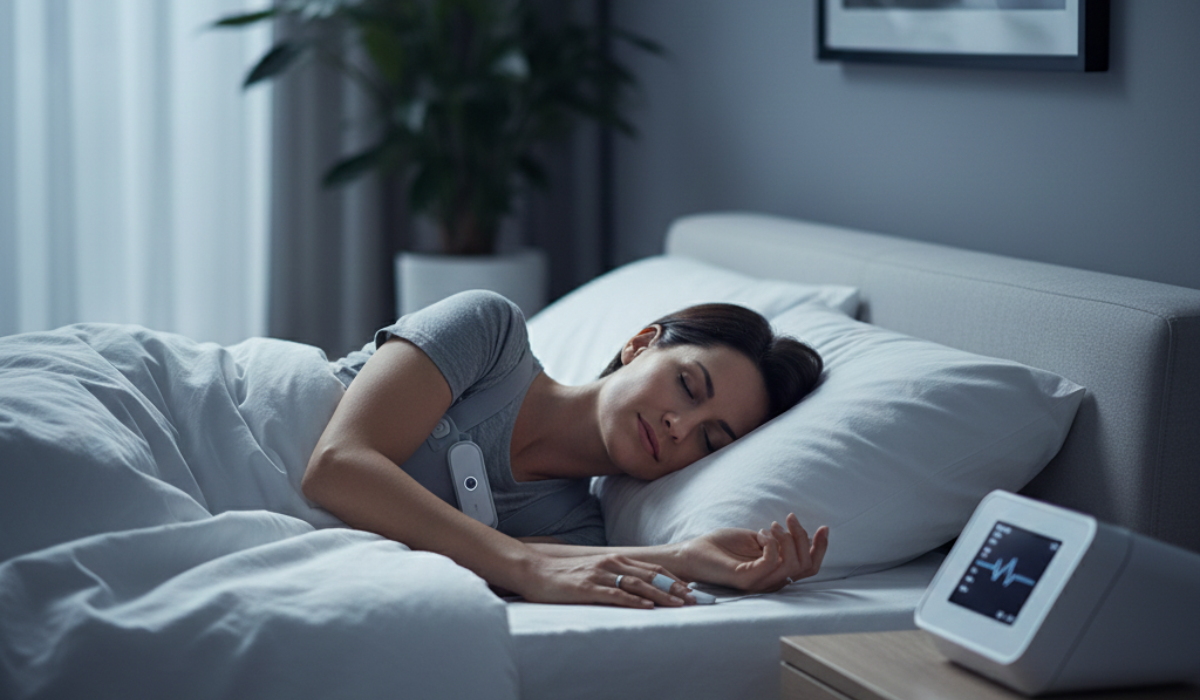
- Generally, the HSAT kit includes a breathing sensor, a finger oxygen monitor, and a chest or abdominal belt. However, the kit differs from one clinic to another. Speak with your healthcare provider and confirm the kit details before taking the device home.
- Set up the HSAT device according to the instructions and apply the sensors accordingly. You can follow your daily sleep routine timings.
- Put on the HSAT device before going to sleep. During your sleep, this device records breathing patterns, oxygen levels, heart rate, and airflow.
- Upon waking up in the morning, remove the device, turn it off, and remove all the sensors.
- After the test, return the HSAT device to your healthcare provider. A well-experienced sleep expert will review and analyse the patient’s sleep study data readings.
- Based on the sleep study evaluation results, your physician will recommend the next steps, if needed.
FAQs
Snoring is one of the danger signs of sleep apnea. If you don’t snore but still face other health issues, such as breath pauses without snoring sound, daytime sleepiness, and morning headaches, then you are experiencing a health condition called “silent sleep apnea.”
Symptoms of obstructive sleep apnea during the day include:
A. Daytime sleepiness.
B. Dry mouth
C. Sore throat
D. Morning headaches
E. Lack of proper focus and concentration
F. Frequent mood swings and depression