

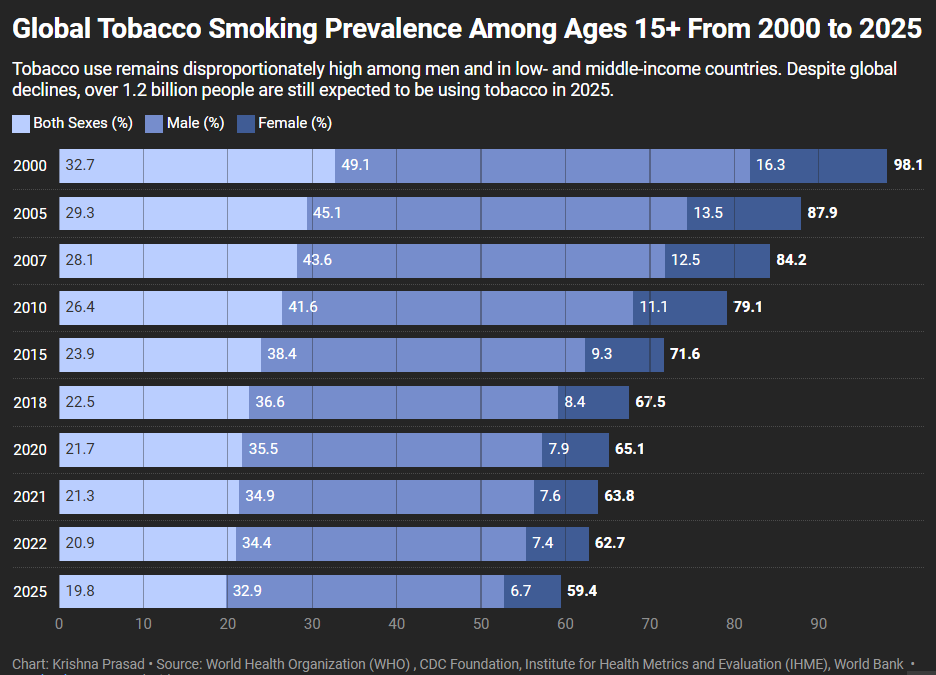
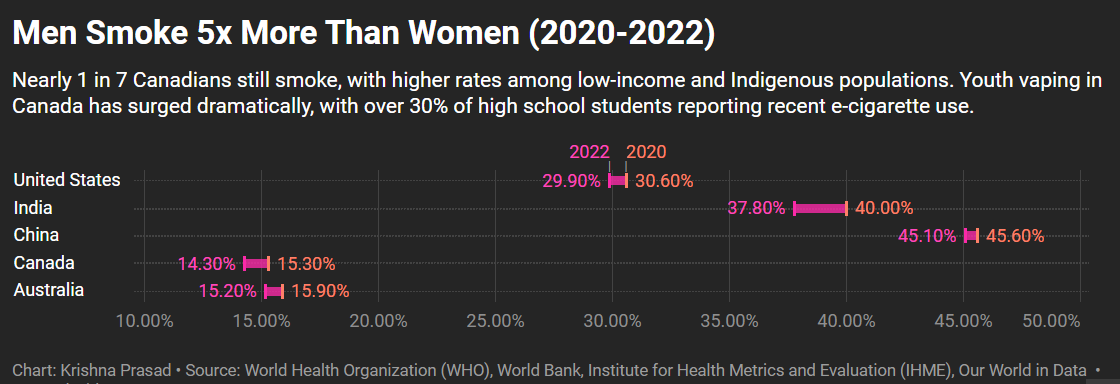
“Smoking is injurious to health” – a bold warning statement etched on the cartons of cigarettes supplemented with the after effect visuals of respiratory health – serves as a mandated reminder of the perils of tobacco consumption. In March 2024, the Canadian tobacco manufacturers produced 1.2 billion cigarettes, which grew 5.1% compared to 1.1 billion in February 2024, says the Statistique Canada Report.
A 2023 study in Nicotine & Tobacco Research found that individuals with a heavy smoking history (over 20 pack-years) face a significantly higher risk of developing sleep apnea. While smoking and OSA pose serious health risks individually, research shows that they can also aggravate one another, raising the risk of additional comorbidities such as cardiovascular and cerebrovascular diseases, metabolic disorders, and GERD.
Smoking cessation is the best way to restore lung health. However, quitting smoking abruptly can be challenging. If you are a habitual smoker, then it’s highly likely that you may develop Obstructive Sleep Apnea (OSA). Smokers with this health condition can seek effective treatments that help them enhance their sleep quality and manage OSA. Among the several available OSA treatments, Continuous Positive Airway Pressure (CPAP) therapy is the first-line treatment.
This raises a series of questions – Is CPAP the right treatment for smokers with OSA? How does CPAP therapy benefit smokers? In this article, we will learn more about smoking and CPAP and how CPAP therapy improves respiratory health and obstructive sleep apnea (OSA) in smokers. We will also explore the unique advantages of CPAP therapy for smokers and why it plays a key role in managing both smoking-related respiratory issues and sleep apnea.
Smoking and its effect on respiratory health
The smoking impact on the lungs is long-lasting and the damage it causes is irreversible, leading to airway constriction. Smoking also affects mucociliary clearance, weakens immune defense, causes loss of elastic recoil, and intensifies the risk of respiratory infections.
The World Health Organization says, tobacco smoking is the foremost risk factor for the surge in COPD deaths, especially occurring in people below 70 years of age. (Chronic obstructive pulmonary disease (COPD) is a condition that limits airflow and makes breathing difficult).
Poor lung health not only reduces quality of life but also increases the risk of respiratory failure. However, the good news is that smoking cessation can bring back the lost health to an extent, slows the disease progression, improves lung function, and reduces respiratory symptoms.
What is Obstructive Sleep Apnea? And why are smokers at higher risk?
Obstructive sleep apnea (OSA) is a widely recognized breathing disorder that is caused by multiple episodes of upper airways blockage during sleep. In other words, OSA impedes free flow of oxygen into the lungs, disrupting restful sleep and resulting in recurrent awakenings.
Some of the most common OSA symptoms include loud snoring, high blood pressure, morning dizziness and headache, reduced sexual desire, gasping or choking episodes amid sleep, etc. People with the following medical conditions are more likely to be affected by OSA – obesity, adenoids, nasal congestions, jaw issues, etc.
Dr. Bastien Lechat (Flinders Health and Medical Research Institute, Flinders University, South Australia) and Professor Danny J. Eckert (Flinders University, South Australia), partnered with the international experts from institutions in France and Australia for a research study on climate change and its impact on OSA. On June 17, 2025, the findings of this study was published as a press release on Flinders University Edu News.
The study exhibited sleep analysis of over 116,000 people globally using the medical-grade sleep monitoring device. As per the research findings of the study, people were 45% more likely to develop Obstructive Sleep Apnea (OSA) on warmer nights (approximately 27°C or 81°F) as opposed to cooler nights (approximately 6°C or 43°F).
Among the various groups affected, OSA is also prevalent in smokers too. There are several potential mechanisms explaining why smoking can cause or worsen OSA. These include:
- Upper Airway Inflammation: Smoking induces chronic inflammation in the upper airway, leading to swelling and narrowing of the airway. This can increase the chances of obstruction during sleep.
- Altered Sleep Architecture: Nicotine can disrupt normal sleep patterns and reduce sleep quality. An altered sleep pattern can exacerbate OSA symptoms.
Impaired Neuromuscular Function: Smoking may affect the neuromuscular control of the upper airway, reducing muscle tone and increasing the risk of airway collapse during sleep.
How Smoking Worsens Sleep Apnea?
When you smoke, the unwholesome chemicals in the tobacco enter your respiratory space and place a serious strain on your overall health, both physically and psychologically. Periodic smoking affects your nervous system abysmally and makes it arduous for you to get restful sleep during nights.
Cigarettes contain virulent chemicals like nicotine, carbon monoxide, cadmium, formaldehyde, arsenic, ammonia, and other dangerous metals. Smoking not only deteriorates your OSA condition but also multiplies the peril of associated metabolic and neurological issues.
In 2025, a study titled, “Association Between Electronic Cigarette Use and Risk of Obstructive Sleep Apnea Among Korean Adults: A Cross‑Sectional Nationwide Population‑Based Study”, was conducted by a team of experts from the Seoul National University. The data for this particular study was extracted from the Korea National Health and Nutrition Examination Survey (KNHANES) to understand the link between dual use of cigarettes and e-cigarettes and OSA risk and sleep health.
The findings of the study states that people smoking e-cigarettes were at double the risk of developing Obstructive Sleep Apnea (OSA) in contrast to non-smokers experiencing this sleep disorder. Researchers are 95% sure that the actual surge in OSA risk lies between 21% and 233% higher for e-cigarette users, and between 32% and 157% higher for conventional cigarette smokers, compared to non-smokers.
The study further adds that smoking and vaping doesn’t just impact respiratory health, but also adversely affects the sleep routine. If you have smoked or vaped anytime before, the probability of you developing sleep apnea is higher than someone who never smoked at all.
Sleep apnea causes your breathing to pause during sleep, leading to frequent awakenings and disrupted sleep. This restlessness increases your stress levels, amplifying nicotine cravings and creating a vicious cycle of where smoking, OSA symptoms, and stress keep feeding each other, thereby subsequently rotting lung health like a rust on metal.
Smoking and CPAP– Is the therapy beneficial for smokers?
According to the World Health Organization (WHO) 2025 report, smoking kills 7+ million people yearly, of which roughly 1.6 million people are non-smoking victims who respire the same air as that of the smokers. Several studies reveal that smoking and sleep apnea are directly correlated to each other.
Smoking impacts on lungs in a severe way by causing damage to the airways and truncating the lung capacity. The more you smoke, the harder it makes your breathing patterns at night, and the higher the risk of worsening sleep apnea.
Continuous Positive Airway Pressure (CPAP) Therapy, is a widely used sleep apnea treatment to aid you breathe freely. In this therapy, a CPAP machine sends pressurized airflow to the nose and mouth while sleeping. The machine opens up the airways, helping you get a break-free sleep. Some CPAP therapy benefits include snoring relief, improved alertness, better-quality sleep, etc.
Benefits of CPAP for Smokers
CPAP for smokers diagnosed with OSA not only offers good sleep but also provides support for lung health. Smoking irritates and inflames the airways, which can increase the risk of collapse during sleep. This therapy reduces the burden on the lungs by opening up the airways. While CPAP is not a substitute for smoking cessation, it still offers several benefits to smokers with OSA. The various CPAP therapy benefits include:
- Reduces Nighttime Oxygen Desaturations: Smokers with sleep apnea often experience frequent drops in oxygen levels during sleep. This is due to lung damage and airway inflammation caused by prolonged smoking. These frequent desaturations in the oxygen levels not only affect the individual’s sleep quality but also puts a significant strain on heart and brain functionalities. CPAP for smokers plays an important role in preventing these oxygen drops by keeping the airway open and maintaining steady airflow. This ensures healthier oxygen levels throughout the night, directly supporting respiratory health and reducing the risk of sleep-related complications.
- Improves Morning Headaches and Fatigue: For many smokers with sleep apnea, waking up with headaches and feeling constantly tired are common daily struggles. These symptoms are often the result of poor sleep and low oxygen levels. CPAP therapy benefits lung health by improving oxygenation at night, allowing more restorative sleep. Over time, this can ease morning headaches and reduce daytime fatigue. Improved sleep also helps smokers take a step towards smoking cessation by lowering stress and the urge to smoke, and thereby making it easier for the smoker to break the smoking cycle.
- Prevents From Airway Collapse: Smoking causes chronic inflammation in the lungs, surging the risk of airway collapse during sleep. This worsens OSA symptoms and harms lung health over time. CPAP therapy helps open the airways and reduces the risk of airway collapse. Apart from sleep apnea patients, CPAP therapy is also prescribed to smokers to support their respiratory health and relieve sleep apnea symptoms.
What to Expect When Using CPAP as a Smoker
When using a CPAP machine, you can expect to see the following results:
| Benefits | Side Effects |
|---|---|
| Improved sleep | Nasal congestion |
| Decrease in snoring | Bleeding from the nose |
| Reduced stress and daytime sleepiness | Mouth dryness |
| Reduced risk of cardiovascular issues | Nosebleeds |
| Better memory | Discomfort using the mask |
Takeaway
Smoking cessation is certainly a challenging task for every smoker. However, it is never too late to address your health. Individuals with compromised respiratory health due to smoking and sleep apnea can benefit from CPAP therapy. Smoking impacts the lungs significantly.
The lung health may further deteriorate if smokers have untreated apnea. CPAP therapy can address breathing and sleeping issues by keeping the airways open.
CPAP benefits for smokers also include better nighttime oxygen levels, fewer headaches, and quality sleep. While not an exact solution, CPAP therapy can help reduce the need to smoke. This treatment improves sleep and stress, which can help you take your first step to smoking cessation.
Frequently Asked Questions (FAQs)
Yes, sleep apnea is common in smokers. As per Mayo Clinic, smokers are thrice more likely to get OSA when compared to non-smokers.
Yes, smoking can worsen sleep apnea and its symptoms. Smoking can aggravate apnea symptoms and increase the need to smoke further.
Article written by: Arwa Aliakber – She’s a Pharmacist and Medical Writer
Disclaimer: This content is solely for educational and informational purposes only. All the opinions and author’s views reflect professional expertise. Freedom Respiratory Sleep Center is not liable for outcomes based on this information. Always consult with a qualified healthcare provider for personalized medical advice. © Freedom Respiratory Sleep Center. All rights reserved.